
What Is a Langkawi Mangrove Tour? Where Do You Go and How Does It Work?
A Langkawi mangrove tour takes you into the island's tidal rivers and narrow waterways. Instead of open beaches, the view changes to tangled mangrove roots, thick green forest and limestone hills rising behind the water.
The route depends on the package you book. Some tours stop at Bat Cave, pass Crocodile Cave, visit a floating fish farm or head to an eagle-watching area. Longer trips may include a beach stop, open-water cruising or snorkelling near Dangli Island.
The important thing to know is that “mangrove tour” is not one fixed itinerary. Tanjung Rhu and Kilim use different jetties and follow different routes. Shared boats, private boats, kayaking and night tours also come with different stops, timings and inclusions.
Always check the actual itinerary before booking. The tour name alone does not tell you where the boat will go.
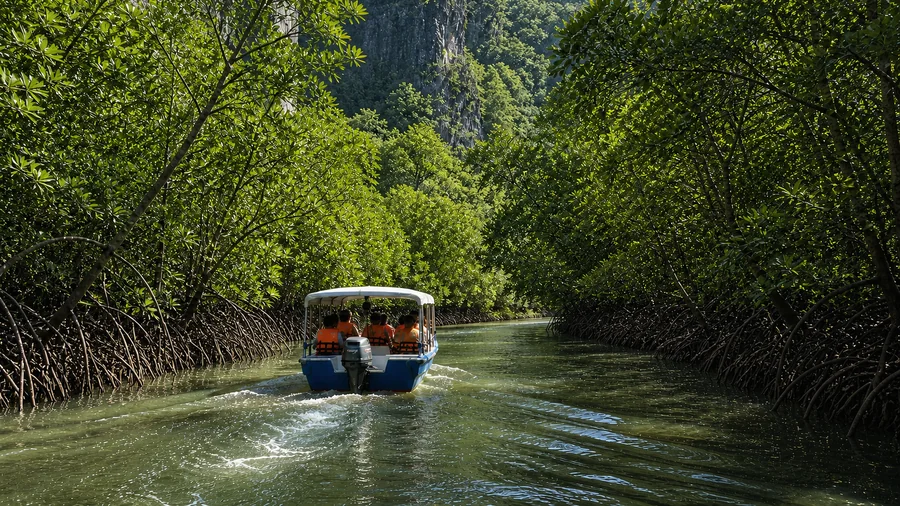
What do you see once the boat enters the mangroves?
Once the boat leaves the jetty, the scenery starts to change quickly.
The wider parts of the river give you a clear view of the limestone hills. Further inside, the waterways become narrower and the trees feel much closer. At low tide, you may see mangrove roots exposed above the mud. When the tide is higher, the water reaches further into the forest.
Most of the trip is spent on the boat. This is different from a Langkawi island-hopping tour, where passengers get on and off at several islands. During a mangrove tour, you usually leave the boat only when the route includes a cave, fish farm, beach or another scheduled stop.
The tide makes a real difference. The same waterway can look open and bright in the morning, then feel quieter and more enclosed later in the day.
Bat Cave: a short walk inside a limestone cave
Some Langkawi mangrove tours include a stop at Bat Cave.
After getting off the boat, you follow a short walkway into the cave. It is dark, humid and has the unmistakable smell of a cave where bats live. Look up and you may see them hanging from the limestone ceiling.
Keep your voice down and avoid using flash photography. The bats are wild animals, not part of a staged attraction.
Bat Cave admission is not included in every package. Some tours cover the entrance fee, while others require payment at the site. Check before departure so there are no surprises at the jetty.
Eagle watching: stay on the boat and keep your camera ready
At the eagle-watching area, passengers normally remain on the boat while the birds circle above the water.
You may see eagles gliding between the hills or flying low across the river. Keep your phone or camera ready, but stay seated while taking photos. Sudden movement on a small boat can easily throw you off balance.
How many eagles appear—and how close they come—depends on the weather, tide and conditions that day. Wildlife does not work to a timetable, so sightings can never be guaranteed.
Want to snorkel? Check the route first
Snorkelling is not a standard part of every Langkawi mangrove tour.
It is usually included only when the itinerary clearly mentions Dangli Island or a snorkelling stop. If the package description does not mention either one, do not assume you will be getting into the water.
For a tour that includes snorkelling, bring swimwear, a towel and dry clothes. It is also worth checking whether masks, snorkels and life jackets are provided.
Water visibility and marine life change with the weather and sea conditions. Promotional photos show what may be possible, not what every trip will look like.
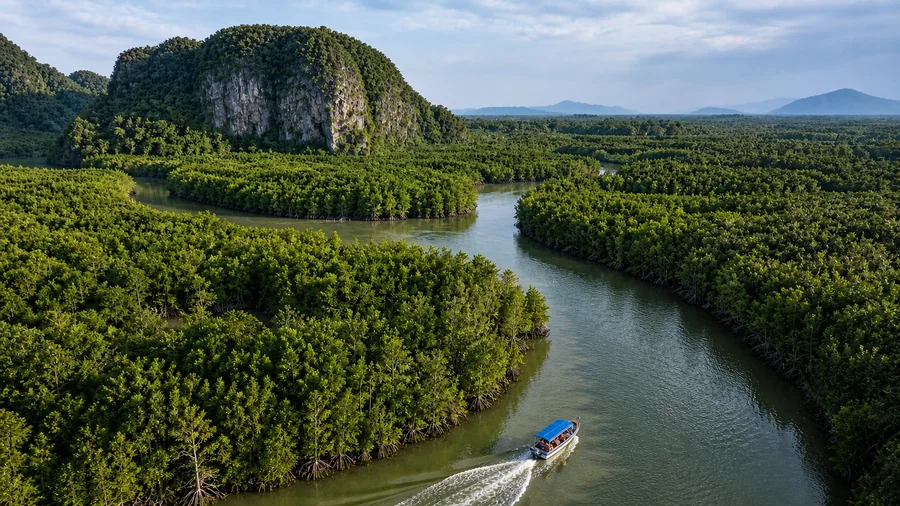
What is the difference between Tanjung Rhu and Kilim?
Tanjung Rhu and Kilim Geoforest Park are two different mangrove-tour areas in northern Langkawi. They have separate jetties, meeting points and boat routes.
Our Tanjung Rhu options include shared and private boat trips, with several route lengths available. Our Kilim options are private boat trips lasting one to four hours.
Neither area is automatically “better.” Tanjung Rhu can be a straightforward choice for travellers looking for a shared tour, while Kilim suits those who want a private boat with a route chosen according to their available time.
Check the meeting point carefully after booking. A reservation departing from Tanjung Rhu does not leave from Kilim Jetty, even though both areas appear close together on the map.
Shared boat, private boat, kayak or night trip?
A shared mangrove boat is priced per person. You travel with other guests and follow the operator's departure time, route and stop duration. It is usually the simplest option for first-time visitors or anyone travelling on a smaller budget.
A private mangrove boat is priced for the whole boat. Only your group will be on board, which gives you more privacy and makes it easier to stay together. If several people are travelling, divide the boat price by the number of passengers before comparing it with a shared tour. Private does not mean completely flexible, though—the boat still follows the route and duration you booked.
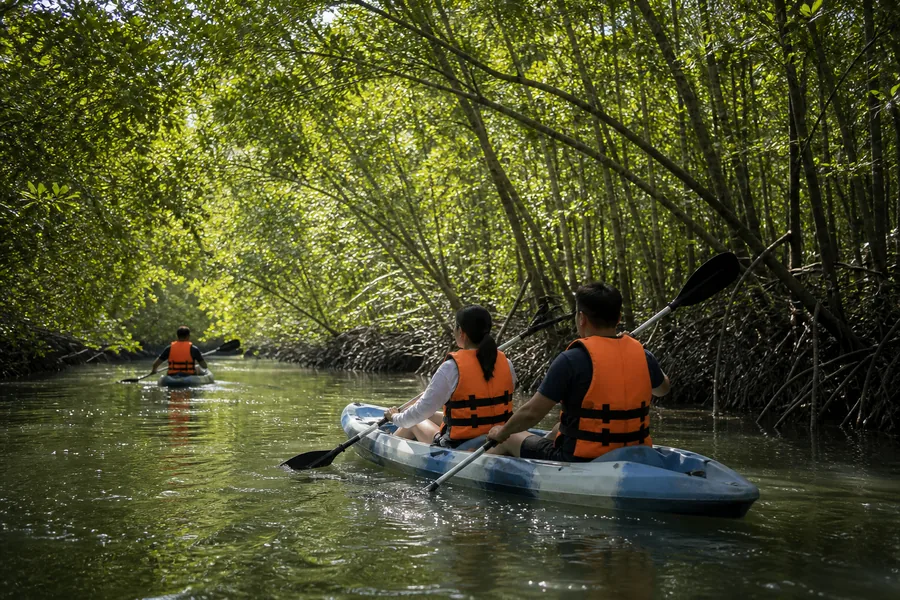
A mangrove kayaking tour moves at a much slower pace. You sit close to the water and can enter quieter sections of the mangroves that feel very different from the main boat channels. It is a more physical trip, so think about the heat, sun and your own fitness before choosing it.
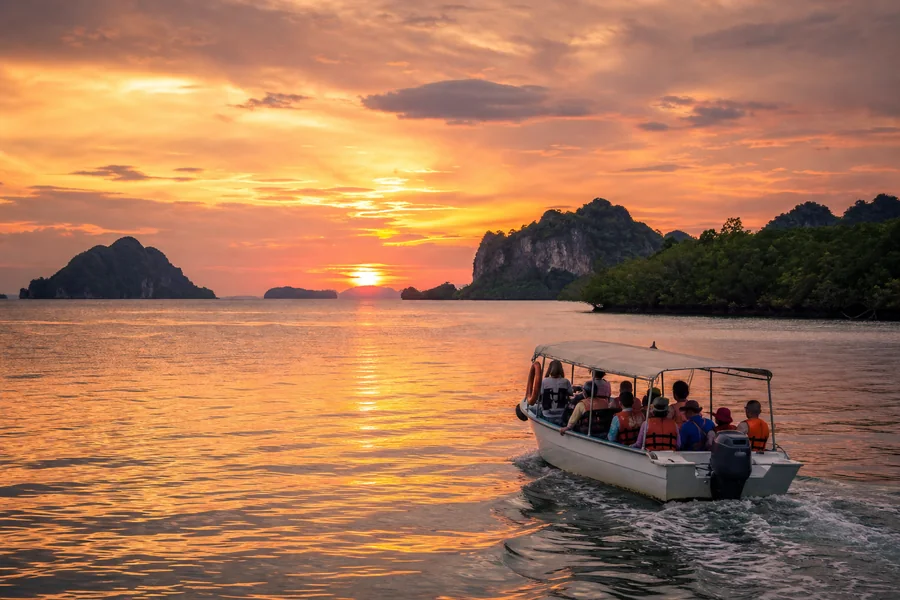
A night mangrove tour normally begins in the late afternoon. The experience may include sunset, the mangroves after dark and dinner, depending on the package. Some tours also mention bioluminescent plankton, often called “blue tears.” Whether it appears depends on the tide, weather and water conditions. It is a natural sighting, not a guaranteed show.
How long does it take, and what should you bring?
Shared tours generally last between two and a half and six hours. Tanjung Rhu private boat routes usually take two to four hours, while Kilim private boat trips may run from one to four hours. Kayaking and night tours are often around four hours.
A longer tour does not automatically mean a better one. It usually means more stops, but you still need to check what those stops are.
Compare the full package: guide, hotel transfer, meals, cave entrance fees, snorkelling equipment and the actual places visited. Two tours with the same duration can offer very different experiences.
For a daytime mangrove tour, bring sunscreen, a hat, drinking water and a waterproof bag for your phone and camera. Light clothing is usually the most comfortable choice in Langkawi's heat.
If you are prone to seasickness, prepare suitable medication before leaving. The mangrove waterways are often calmer than the open sea, but some longer routes may travel through exposed water.
Bring swimwear, a towel and dry clothes only when your itinerary includes a beach or snorkelling stop.
Before setting off, confirm the jetty, meeting time and hotel-transfer area. Weather, tide and route conditions can affect the return time, so avoid placing another tightly scheduled activity immediately after the tour.